Precise synchronization
Precise synchronization with the Lab Streaming Layer (LSL) protocol.
Integrating DOT-fNIRS with EEG allows researchers to leverage the strengths of both techniques while minimizing their individual limitations. This multimodal approach delivers a more precise and comprehensive understanding of brain activity than relying on either method in isolation, offering better spatial monitoring than standard fNIRS, paired with real-time electrical activity. Cortivision and mBrainTrain for multimodal brain activity measurement in highly demanding and active movement conditions.


Precise synchronization with the Lab Streaming Layer (LSL) protocol.

Fully customizable electrode and optode positions thanks to the original CortiCap cap system.

Standalone reliability with dual SD card data protection.

Compatible to be used with: CortiView2, CortiPrism2, and mbt Streamer software.
| ExG / Aux Channels | 8x ExG | |||
|---|---|---|---|---|
| Features |
Smarting PRO |
Smarting PRO X |
||
| EEG channels |
from 8 to 32x EEG |
64x EEG (High-Density) |
||
| Type of sensors |
Gel-based |
|||
| Data Storage |
Wireless Streaming & internal SD Card |
|||
| fNIRS Pairing |
Cortivision Spectrum C23 from 8 detectors by 12 emitters to 32 |
|||
Smarting PRO
Smarting PRO X
from 8 to 32x EEG
64x EEG (High-Density)
Gel-based
Wireless Streaming & internal SD Card
Cortivision Spectrum C23 from 8 detectors by 12 emitters to 32
detectors by 48 emitters (qual-distance fNIRS or DOT-NIRS (High spatial density)
Example of integration
To demonstrate the true capabilities of this fully mobile, multimodal setup, Cortivision and mBrainTrain systems were used simultaneously to investigate Cognitive-Motor Interference (CMI) during a demanding executive function paradigm.
The Experimental Setup Participants performed a classic Go/No-Go task under two distinct movement conditions:
1. Single-Task: Standing still.
2. Double-Task: Walking on a treadmill
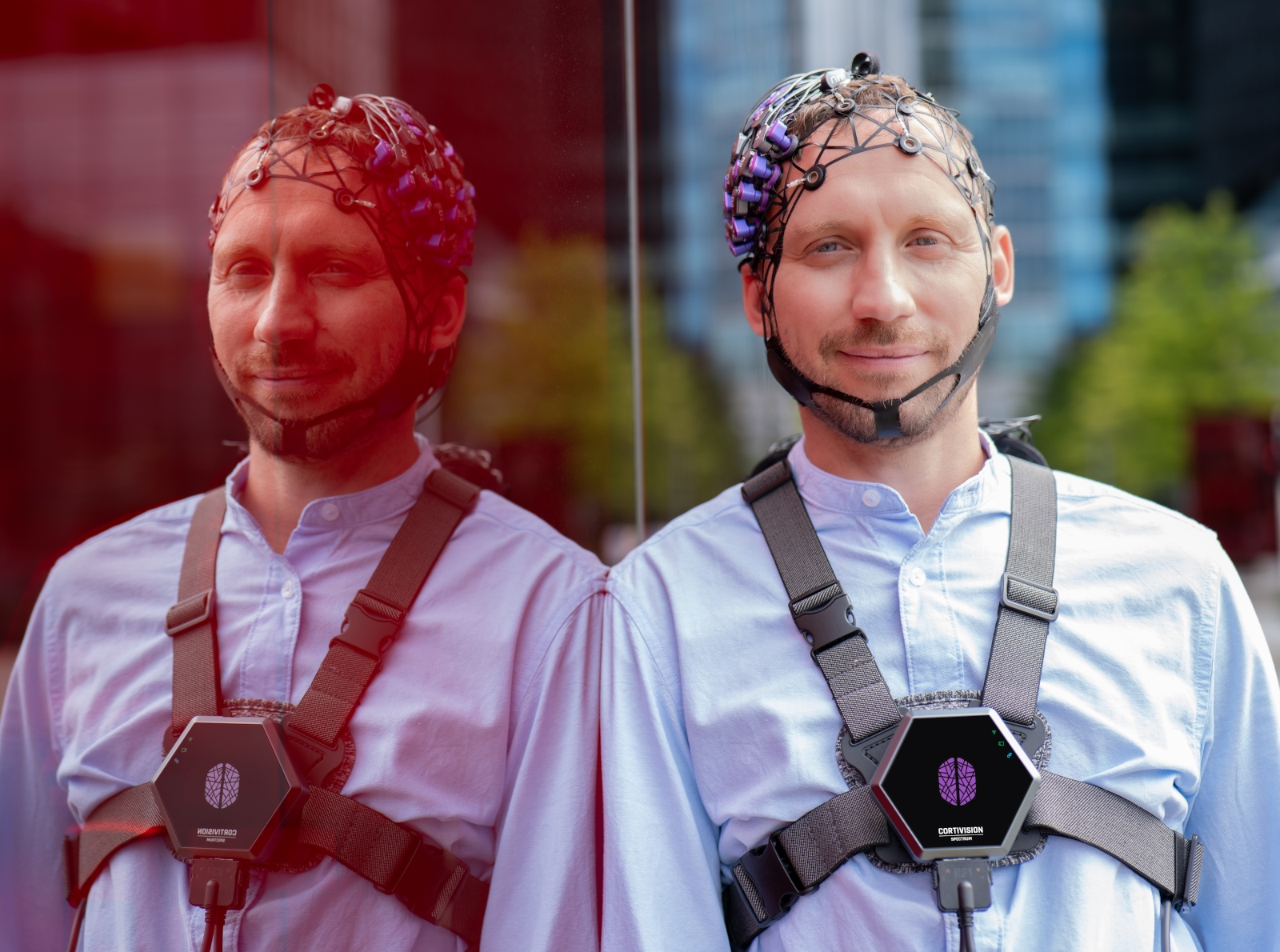
The Results: Hemodynamic & Electrophysiological Insights Thanks to the synchronization (via LSL) and the high spatial resolution of the Spectrum C23 paired with the temporal precision of the Smarting Pro, the study captured distinct brain responses across both modalities simultaneously:
The Cortivision system mapped blood oxygenation changes across attentional, cognitive control, and somatosensory networks. High-density optical tomography revealed spatial shifts in resource allocation as participants transitioned from standing to walking.
The mBrainTrain Smarting Pro captured real-time neural oscillations and event-related differences between the single-task and double-task conditions, free from movement artifact distortion.
This integration captures high-quality spatial and temporal data during active, whole-body movement.


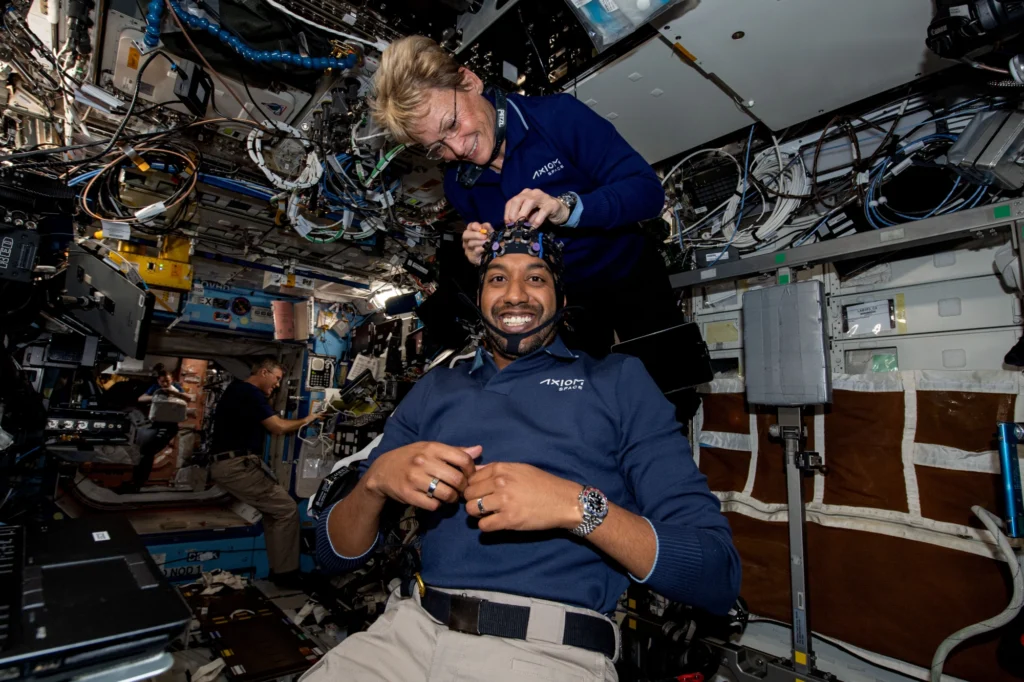
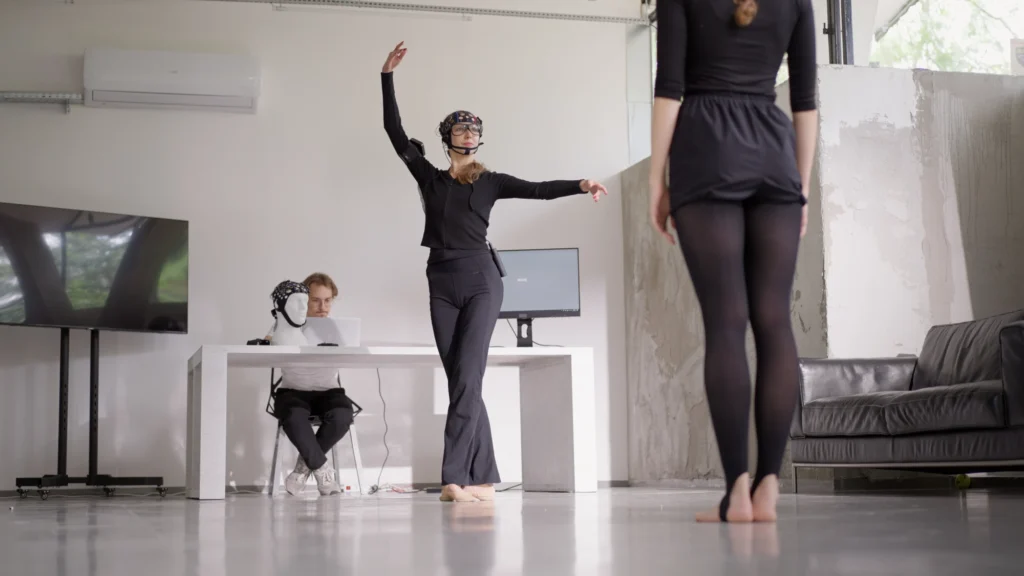
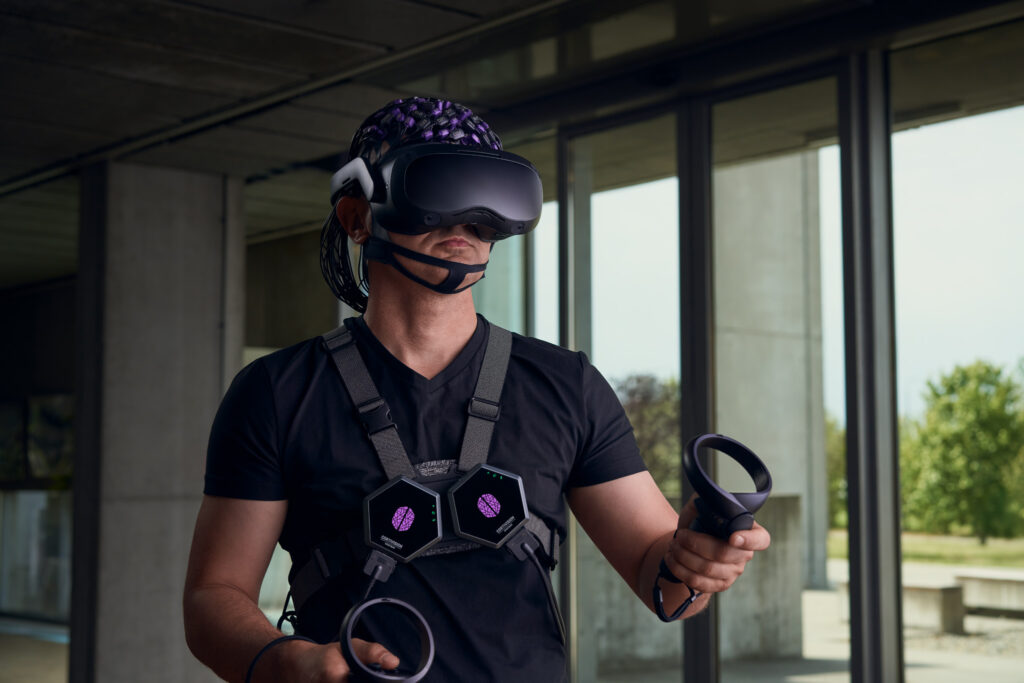


The Cortivision and mBrainTrain setup supports two approaches. You can use a standard textile EEG cap based on the international 10-5 system, supplied as part of the integrated solution. EEG electrodes are first positioned at the required locations, while the remaining positions can be used to arrange the fNIRS optodes according to the experimental protocol. For studies requiring a specific multimodal layout, we can also manufacture a custom CortiCap. The cap is designed around your experiment, with dedicated positions for both EEG electrodes and fNIRS optodes. This provides a repeatable setup tailored to the brain regions and measurement geometry required by your study.
A textile 10-5 cap provides maximum flexibility: you select the required EEG positions first and then arrange the fNIRS optodes around them. A custom CortiCap takes the opposite approach - the complete EEG + fNIRS layout is designed for your specific experiment in advance. Electrode and optode locations can therefore be optimized together, making complex multimodal setups easier to reproduce between participants and measurement sessions.
No. The Cortivision fNIRS and mBrainTrain EEG systems remain two independent measurement devices that are precisely synchronized in time. This is an important advantage of the integration. Both systems can be used independently for dedicated fNIRS or EEG experiments, or combined whenever multimodal acquisition is required. Researchers are not locked into a single-purpose multimodal device.
Synchronization is handled through the Lab Streaming Layer (LSL) protocol, providing a common timing framework for both modalities and experimental events. The signals themselves are recorded separately using the dedicated software provided for each system. This preserves the native acquisition workflow of both platforms while allowing the resulting EEG and fNIRS datasets to be accurately aligned in time.
Yes. The same Cortivision Spectrum hardware can support both measurement approaches. With a textile 10-5 cap, Spectrum can be configured for traditional source-detector fNIRS measurements. For high-density DOT-fNIRS measurements, the same hardware can be combined with a dedicated CortiCap designed for the required optode geometry. This allows researchers to select the measurement configuration according to the needs of each experiment without investing in separate fNIRS platforms.
No. The Cortivision and mBrainTrain systems can also be used in stationary laboratory experiments. However, mobility is where the combination offers some of its greatest advantages. Both platforms are designed to support measurements beyond conventional seated laboratory paradigms, making the integrated setup particularly suitable for studies involving walking, physical activity, training, social interaction, and other naturalistic behaviors.
The systems use different wireless communication technologies: Cortivision Spectrum communicates via Wi-Fi, while the mBrainTrain EEG system uses Bluetooth. This allows both systems to operate wirelessly within the same multimodal setup while maintaining independent communication links.
Yes. Because EEG and fNIRS remain independent systems, each can be used as a standalone research platform or as part of the synchronized multimodal configuration. This makes the setup suitable for laboratories that run EEG-only, fNIRS-only, and combined EEG-fNIRS studies using the same equipment.
The integration is not simply a physical combination of two devices on one cap. It brings together compatible headgear, coordinated EEG and fNIRS layouts, wireless acquisition, time synchronization via LSL, and dedicated acquisition software for both modalities. It is also supported directly by both manufacturers, ensuring access to technical expertise, application guidance, and coordinated support across EEG and fNIRS systems throughout setup, data collection, and experimental design. Depending on the study, the setup can be based on a flexible textile 10-5 cap or a purpose-built CortiCap designed around the exact EEG and fNIRS measurement locations required by the experiment.